
Kamadhenu is one of the most revered and spiritually powerful beings in Hindu mythology. Known as the “divine cow” or “wish-fulfilling cow,” she symbolizes abundance, purity, nourishment and divine blessings. Her presence in scriptures reflects the deep connection between nature, prosperity and spiritual well-being.
Below is a complete, refined and high-readability recreation of her story, significance and meaning.
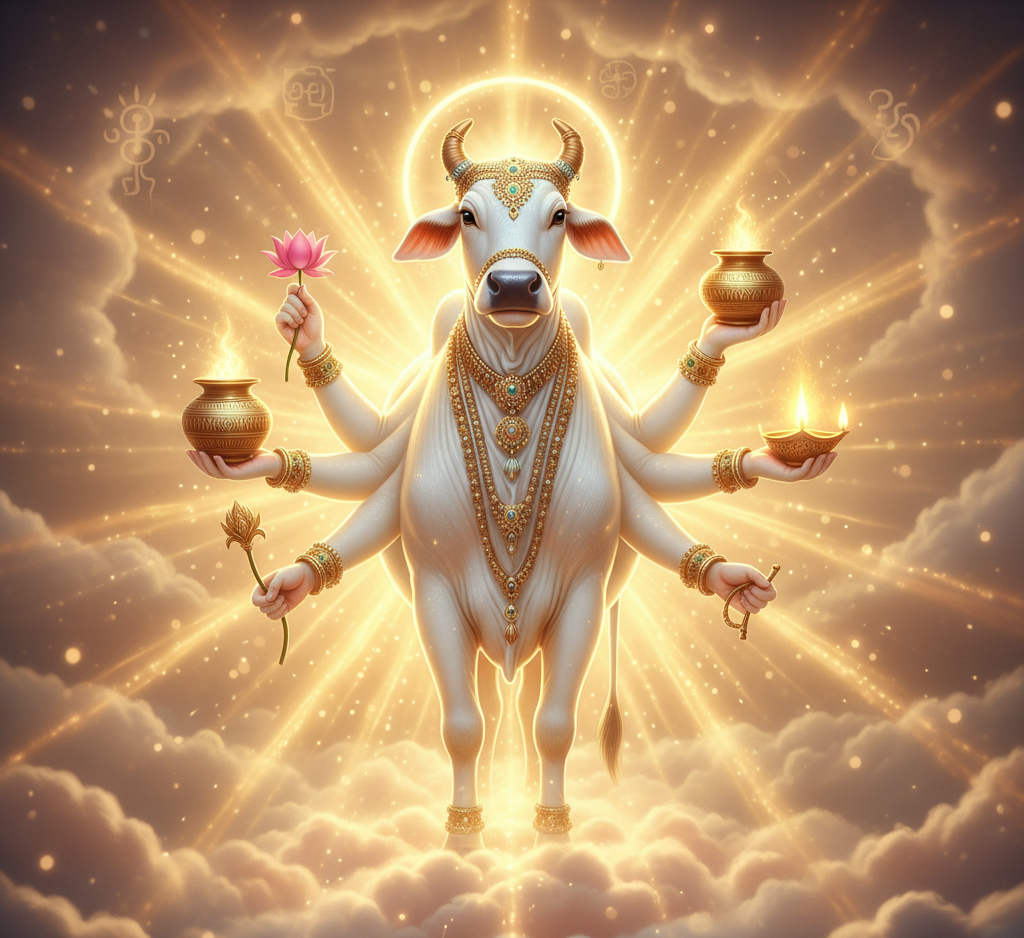
1️⃣ Mythological Background
Divine Origin
Kamadhenu emerged during the Samudra Manthan, the cosmic churning of the ocean performed by gods and demons to obtain Amrita, the nectar of immortality. Along with many celestial treasures, Kamadhenu arose as a divine gift meant to nourish, protect and bless all beings.
Moreover, her arrival symbolized the arrival of prosperity and divine grace.
Goddess and Mother of All Cows
Kamadhenu is considered a manifestation of the goddess herself. She is honored as the mother of all cows, representing purity, fertility and unconditional nourishment. Often depicted with a radiant white form, she embodies divine gentleness and abundance.
2️⃣ Symbolism and Attributes
Wish-Fulfillment
Her name comes from Sanskrit:
- Kama = desire/wish
- Dhenu = cow
This makes Kamadhenu the cow that fulfills desires, making her a central symbol of prosperity, blessings and spiritual merit.
Divine Provider
Kamadhenu is believed to provide an endless supply of milk, symbolizing nourishment, wealth and the sustaining power of nature. Her presence is seen as a source of well-being and abundance in every aspect of life.
3️⃣ Depictions and Iconography
Appearance
Kamadhenu is portrayed as a celestial cow, glowing with divine light. Sometimes she appears as a hybrid form — cow head with a woman’s torso — symbolizing her spiritual and nurturing essence.
Sacred Companions
She is frequently shown with her divine calf Nandini, and often accompanied by sage Vashishta, who is believed to be her guardian and caretaker.
4️⃣ Cultural and Religious Significance
Sacred Status in Hindu Dharma
Kamadhenu symbolizes purity, motherhood and universal nourishment. Her worship is connected to Gau Seva, the sacred service of protecting and caring for cows, believed to bring divine blessings, peace and prosperity.
Scriptural Presence
Kamadhenu appears in the Vedas, Puranas, and various ancient texts. She is praised in hymns for her ability to bless devotees with wealth, health and spiritual upliftment.
5️⃣ Rituals and Worship
Festivals & Pujas
Kamadhenu is honored during specific rituals, especially those seeking abundance, fertility, health and spiritual merit. Devotees perform puja to invite her blessings for prosperity and fulfillment of desires.
Offerings
Milk, ghee, butter and other dairy offerings symbolize gratitude and respect for her divine nourishment.
6️⃣ Modern Relevance
Cultural Heritage
Kamadhenu remains an important symbol of India’s spiritual and cultural heritage. Her image appears in temples, art, literature, and traditional rituals celebrating abundance and purity.
Environmental & Ethical Symbol
In today’s world, Kamadhenu represents compassion, ecological care and ethical treatment of animals. She reminds us to live in harmony with nature and honor all beings that sustain life.
⭐ Summary
Kamadhenu, the divine cow, is a powerful symbol of abundance, wish-fulfillment, nourishment, and spiritual purity. Her mythology highlights the sacred bond between humans, nature, and the divine. By honoring her, one aligns with prosperity, compassion and the nurturing force of the universe.